
Grout Repair in Baltimore, MD
Rebuild the Joints Before Water Finds the Subfloor
A grout line is the only thing standing between a wet surface and the substrate beneath it, so a hairline crack in a shower corner is a moisture path rather than a cosmetic flaw. Groutsmith Maryland performs professional grout repair across Baltimore, MD and the neighboring communities, rebuilding cracked, missing, and crumbling joints in showers, tub surrounds, floors, thresholds, backsplashes, and tiled countertops before the damage reaches anything structural in the framing or subfloor underneath the tile.
Repair works best when the cause gets addressed alongside the symptom. Cracks at inside corners and changes of plane usually mean rigid grout was installed where flexible material belongs, so those areas are rebuilt with acrylic grout that moves with the surface instead of splitting again. New material is color matched to the grout beside it, sealing can follow once everything cures, and each project begins with a free estimate you can request through our contact page.
Grout Repairs We Handle
Cracked Grout Joint Repair
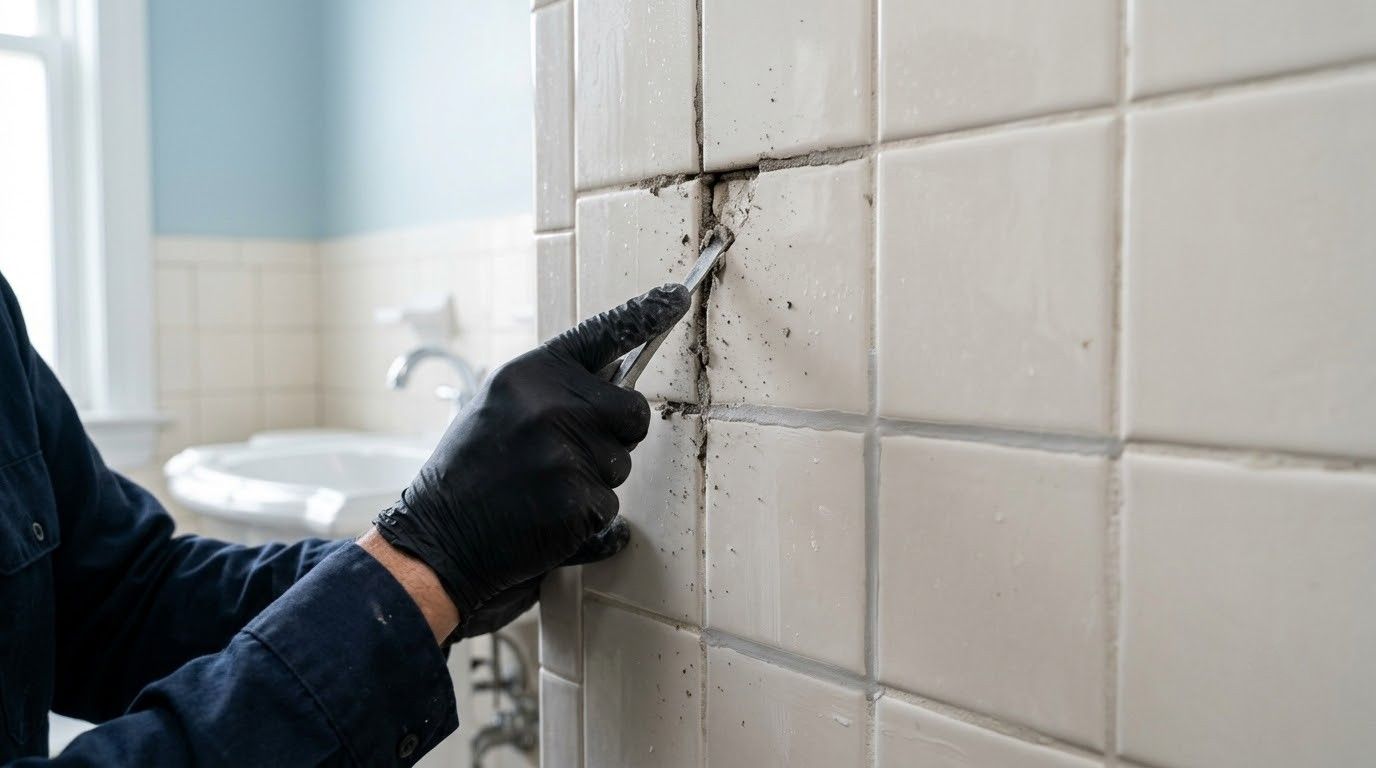
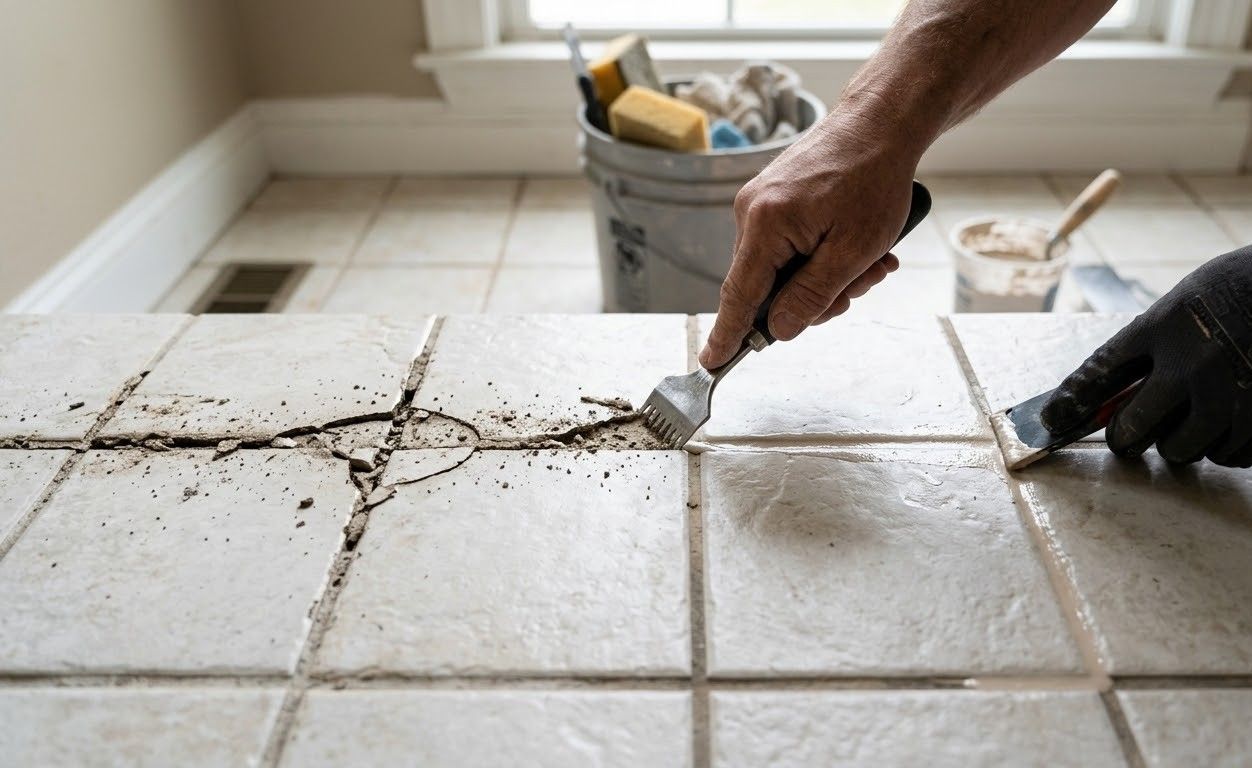
Hairline and open cracks get cut back to sound material rather than filled over, which is what keeps the repair from reopening within a season. The rebuilt joint is finished flush and blended so the correction disappears into the surrounding lines.
Missing and Crumbling Grout Replacement
Joints that have turned powdery no longer hold anything together and simply wash away with each cleaning. Failed material is removed completely and replaced with fresh grout, restoring both the appearance and the seal those lines were installed to provide.
Corner and Change-of-Plane Repair
Wall-to-wall and wall-to-floor transitions move constantly as a house expands and contracts through the seasons. Those joints are rebuilt with flexible acrylic grout or color-matched caulk, which absorbs that movement instead of transferring it into a fresh crack.
Grout Color Matching for Repairs
A structurally perfect repair still looks wrong if the new grout sits three shades off the old. Color is matched against the existing joints in the room, so the finished work blends rather than advertising exactly where the damage was.
Shower Floor and Curb Grout Repair
Shower pans and curbs take standing water daily and fail earlier than the walls above them for that reason. These areas get rebuilt with materials chosen for constant saturation, then sealed so water stops working its way into the assembly.
Threshold and Transition Grout Repair
Doorways and floor transitions absorb the most foot traffic in a house, and their grout gives out first. Rebuilding those runs keeps grit from migrating under the tile and stops the slow loosening that follows a failed transition joint.
Why Choose Us for Grout Repair
Flexible Material Where Movement Belongs
Inside corners and perimeters need to flex, and standard cement grout cannot do that. Using acrylic grout and color-matched caulk in those locations is the difference between a repair that lasts and one that cracks again by spring.
Repairs Blended, Not Just Patched
Anyone can push new grout into a gap. Cutting back to sound material, matching the color, and finishing the joint at the correct depth is what makes the repaired section read as original work rather than an obvious correction.
The Cause Gets Diagnosed First
Grout rarely cracks without a reason, whether that is subfloor deflection, a missing movement joint, or a loose tile underneath. Identifying it means the repair addresses the actual problem instead of resetting the clock on the same failure.
Repair Considered Before Replacement
Full regrouting and demolition are real options, but they are rarely the first one worth reaching for. Where sound grout surrounds a damaged section, repairing that section keeps the project smaller, faster, and considerably less disruptive to your household.
Sealing Available Once Repairs Cure
New grout is at its most absorbent right after it sets, which makes it vulnerable to the very staining you just corrected. Clear or color sealing can follow on a return visit, locking in the repair for the long run.
A Free Estimate on Every Repair
Small jobs deserve the same clarity as large ones. We look at the damage in person, explain what caused it, and put a written price in your hands before anything is cut, removed, or rebuilt on your surfaces.
Small Repairs Are What Keep Big Projects Off Your Calendar
Almost every tile failure that ends in demolition started as a joint someone decided to live with for another season. Water is patient, and a crack that looks trivial in March has usually found the substrate by autumn.
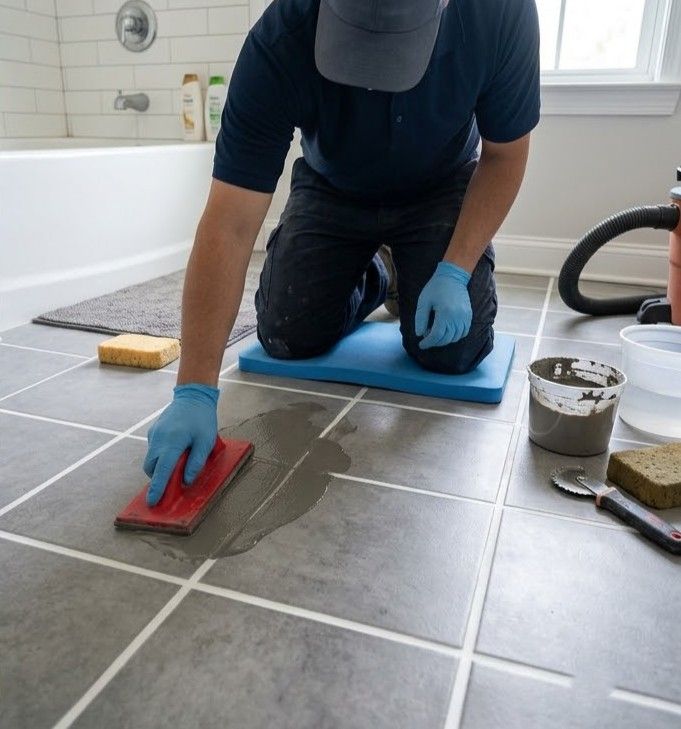
Groutsmith Maryland exists to interrupt that sequence for homeowners across Baltimore, MD, rebuilding the joints that failed and explaining plainly why they failed in the first place. If something in your shower or along your floor has started to open up, request a free estimate through our contact page and we will come take a careful look at what is actually behind it.
Testimonials
What our customers have to say...
Frequently Asked Questions
Can cracked grout be repaired without replacing the tile?
In most cases, yes. Damaged joints are cut out and rebuilt while the surrounding tile stays exactly where it is. Tile only needs replacing when it has cracked itself or has come loose from the substrate underneath it.
Why does grout keep cracking in the same place?
Repeat cracking almost always signals movement rather than defective material. A flexing subfloor, a missing movement joint, or rigid grout installed at a corner will keep breaking whatever gets packed into that gap until the underlying cause changes.
Should a cracked joint be caulked or regrouted?
It depends on the location. Field joints across a flat surface get rebuilt with grout, while inside corners and perimeters call for flexible caulk or acrylic grout, because those areas are designed to absorb seasonal movement rather than resist it.
Is cracked grout a sign of a bigger problem?
Sometimes. Isolated cracking is usually normal aging, but long runs of failure, hollow-sounding tile nearby, or joints breaking across a whole room point to a substrate issue. Groutsmith Maryland checks for that on Baltimore, MD projects before any cosmetic work begins.
Can new grout be matched to old grout?
Closely, yes. Existing joints are compared against available colors and the closest match is selected, though aged grout has usually shifted from its original shade. Where a perfect match is not possible, color sealing evens everything out afterward.
How long does grout repair take to cure?
Most repairs are firm within a day and fully cured in two to three, depending on humidity and how deep the joint runs. Showers should stay dry through that window so the new material sets properly rather than staying soft.
What happens if cracked grout is simply left alone?
Water enters the crack, saturates the substrate, and slowly breaks the bond holding nearby tile in place. What begins as one repairable joint becomes loose tile, spreading damage, and eventually a project far larger than the original fix.
Can only one section of a floor be repaired?
Yes, and it often makes sense. Groutsmith Maryland regularly repairs isolated damage in Baltimore, MD homes rather than regrouting entire rooms, though color sealing afterward is well worth considering whenever the surrounding grout has aged noticeably over time.