
Regrouting in Baltimore, MD
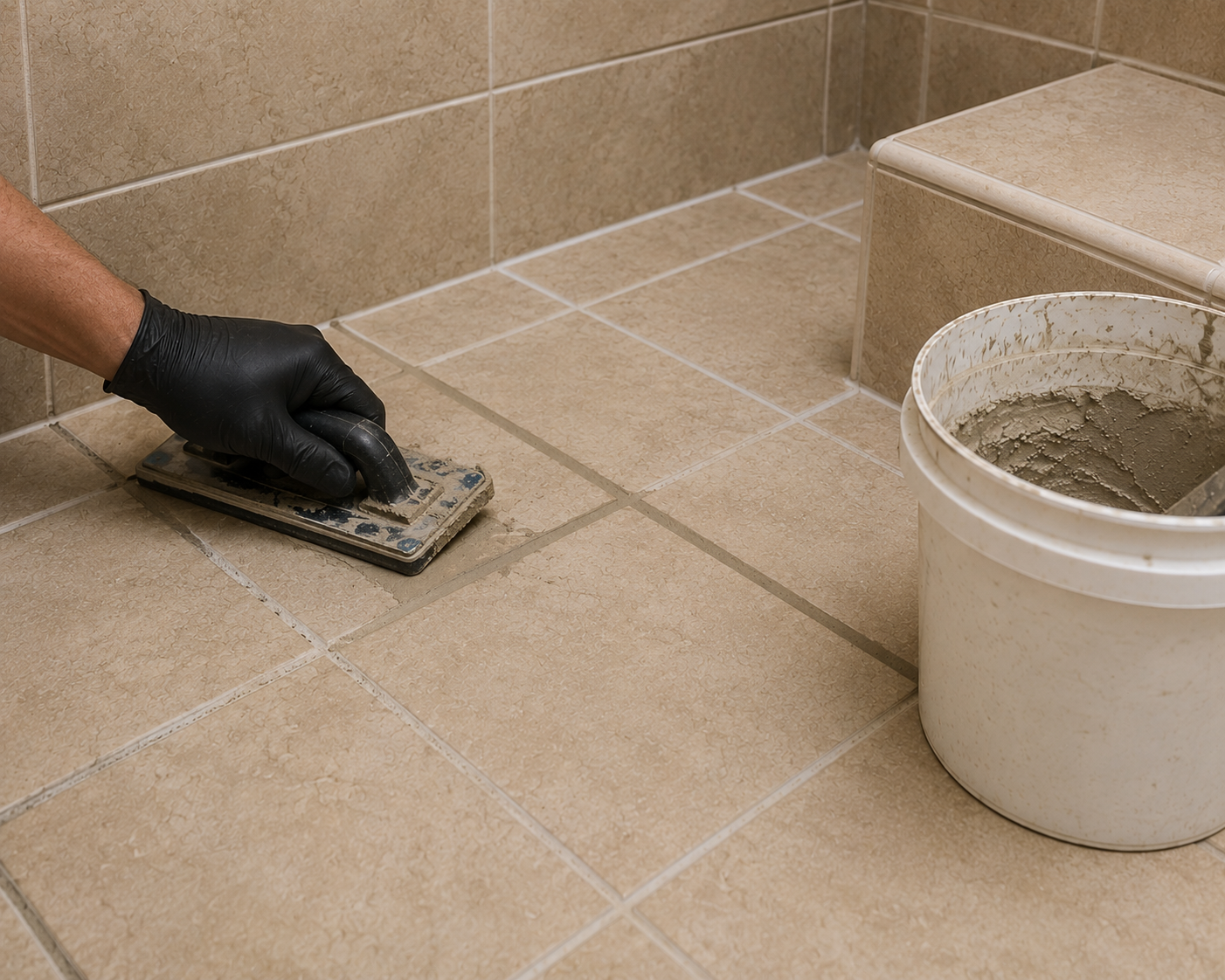
Fresh Joints Without Giving Up the Tile You Like
Grout removal has to reach roughly two thirds of the joint depth for new material to bond and hold, which is exactly why surface skim coats fail within a season and give regrouting an undeserved reputation. Groutsmith Maryland performs full regrouting throughout Baltimore, MD and the surrounding communities, replacing failed joints across showers, tub surrounds, kitchen floors, entry tile, backsplashes, and tiled countertops while every original piece of tile stays exactly where it sits.
Regrouting becomes the right answer once too much of a surface has failed for spot repair to make sense. Old grout comes out, dust is controlled as we work, and fresh material goes in at a color you select rather than whatever happens to be closest. Sanded or unsanded grout is chosen to suit your joint widths, movement areas get flexible material, and sealing follows. Request a free estimate through our contact page to get started.
Regrouting Services We Provide
Full Shower Regrouting
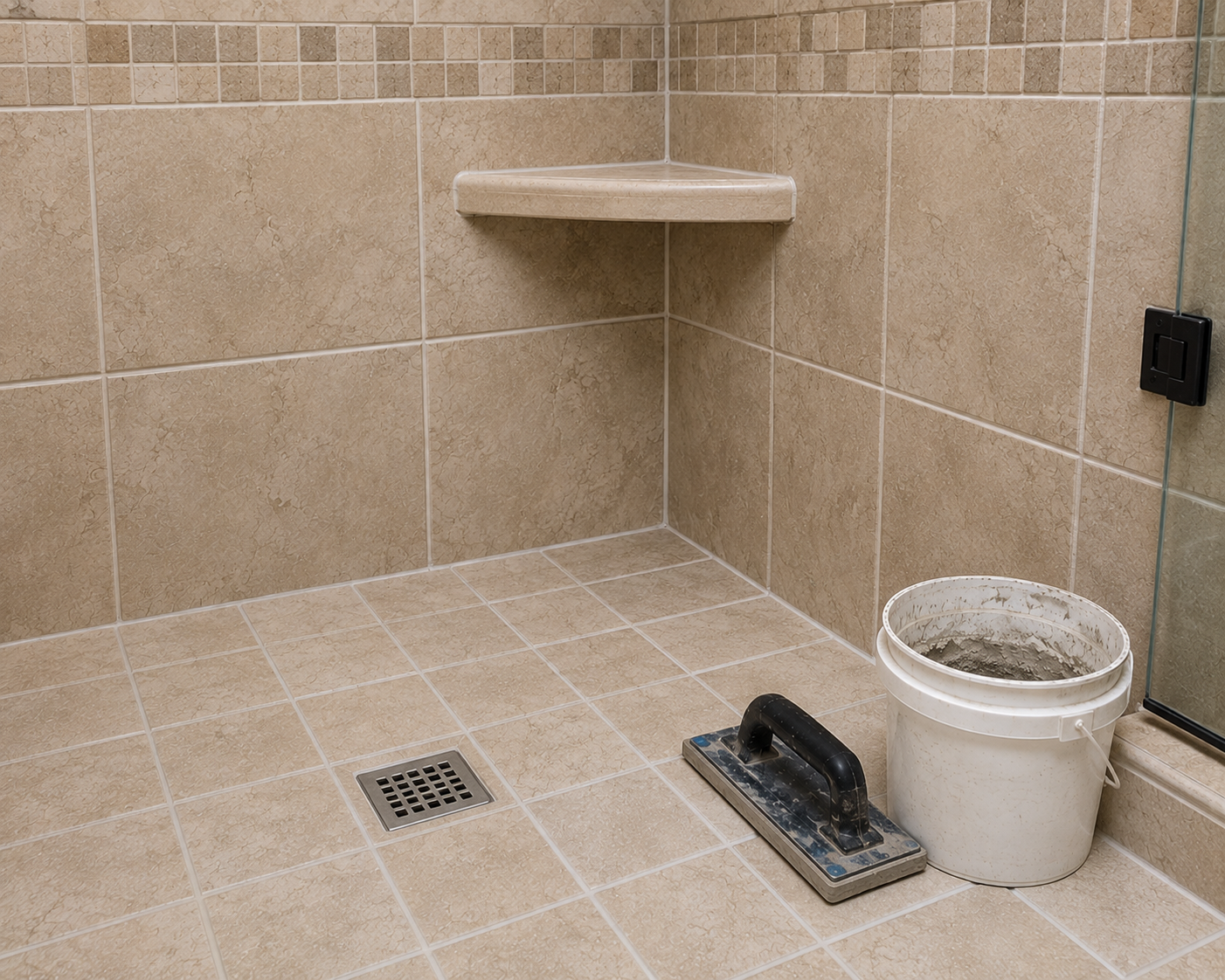
Enclosures where the grout has failed broadly get every joint removed and replaced, walls through floor. Doing the whole shower at once avoids the patchwork appearance that comes from replacing sections piecemeal across several years of separate repairs.
Floor Regrouting
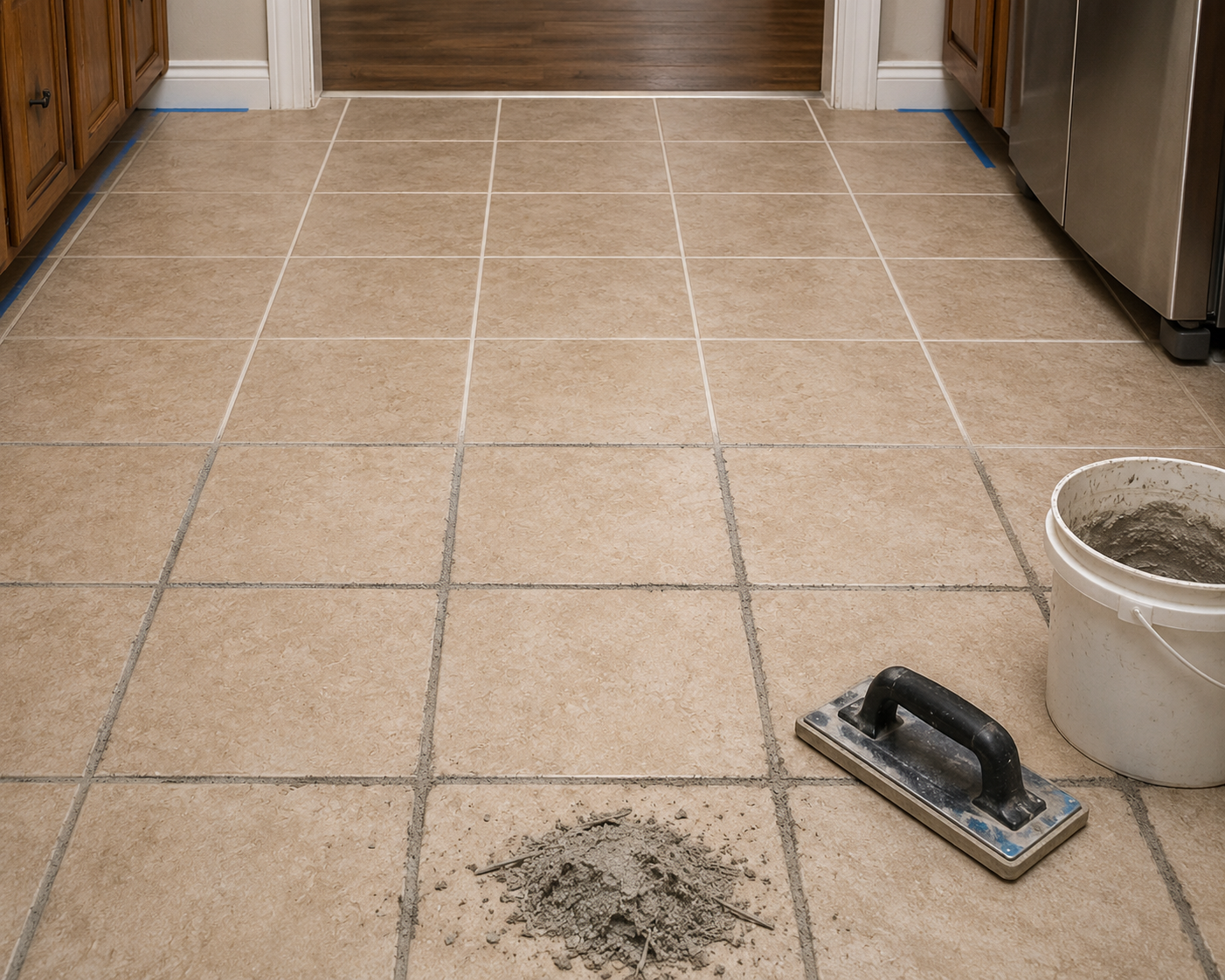
Kitchen, hallway, and entry floors with widespread joint failure are regrouted completely so the finish reads as consistent underfoot. Removal is handled with dust control, and thresholds and transitions are addressed at the same time as the field.
Partial and Room-by-Room Regrouting
Not every project needs the whole house at once. A single bathroom, one floor, or a defined section can be regrouted on its own, with color chosen to sit comfortably beside whatever grout remains in the adjoining spaces.
Grout Color Selection and Matching
New grout is an opportunity rather than an obligation to recreate the old shade. Match what was there, go darker to hide traffic, or brighten the room entirely, using samples compared against your actual tile before anything is mixed.
Sanded and Unsanded Grout Replacement
Joint width determines the material, since sanded grout suits wider lines while unsanded belongs in narrow ones and against delicate surfaces. Choosing correctly is what prevents the shrinkage cracking and scratched tile that follow from using the wrong product.
Caulk Replacement at Movement Joints
Corners, perimeters, and changes of plane are finished with flexible caulk rather than the new grout used elsewhere. Those locations are designed to absorb seasonal movement, and filling them with rigid material simply guarantees fresh cracking within the year.
Why Choose Us for Regrouting
Removal to a Depth That Actually Bonds
New grout laid over old material has nothing to grip and releases quickly, which is the single most common reason a regrouting job disappoints. Removal here goes deep enough for the fresh grout to lock in and stay.
Dust Controlled Throughout the Work
Grout removal generates fine cement dust that travels far beyond the room it started in. Containment, extraction, and protection of adjoining spaces are all part of the process, so the project stays inside the bathroom where it belongs.
Your Tile Comes Through Intact
Careless removal chips glaze and nicks tile edges, leaving damage that outlasts whatever the regrouting fixed. Working carefully around each piece takes longer, and it is the reason the finished surface looks genuinely new rather than merely re-lined with fresh grout.
A Color You Actually Chose
Grout color changes how an entire room reads, so it deserves a real decision rather than a default. We bring samples, compare them against your tile in the room's own lighting, and let you sit with the choice.
Flexible Material Where It Belongs
Movement joints get caulk, field joints get grout, and knowing which is which is what separates work that holds from work that cracks. That distinction gets applied consistently across every surface rather than only where it is obvious.
Sealing Built Into the Plan
Fresh grout is porous and vulnerable during its first months, which is precisely when staining does lasting damage. Sealing on a return visit after curing protects the work, and we schedule it rather than leaving you to remember later.
New Joints Are the Cheapest Renovation a Bathroom Can Get
There is a moment when a room stops looking dated and starts looking neglected, and more often than not the grout lines are what crossed that line. Replacing them changes the whole impression for a fraction of what a remodel costs, and the tile you originally chose stays exactly where it is.
Groutsmith Maryland regrouts showers, floors, and countertops for homeowners throughout Baltimore, MD, with colors you pick yourself and the kind of preparation that makes the work actually last. Request a free estimate through our contact page whenever you would like a closer look at the colors and the options available to you.
Testimonials
What our customers have to say...
Frequently Asked Questions
Can new grout be applied over existing grout?
Not successfully. Fresh grout needs enough depth to bond mechanically, so laying it across old material produces a thin layer that cracks and releases within months. Proper regrouting always begins by removing the failed grout down to a sound depth first.
How much of the old grout has to come out?
Roughly two thirds of the joint depth is the working standard, and more where the existing material has deteriorated badly. Removing less saves time on the day and costs far more when the whole job has to be redone.
Is regrouting worth it compared with retiling?
For sound tile, regrouting costs a fraction of replacement and finishes in a fraction of the time, with no demolition or subfloor exposure involved. Retiling makes sense when the tile itself is failing or the layout is changing.
How messy is the process?
Grout removal creates fine dust, which is why containment and extraction matter so much. With those in place the work stays confined to the room and cleanup happens as part of the job rather than being left to you.
How long does regrouting a shower take?
Most standard enclosures are removed and regrouted within a single day, with caulking finished at the end. Groutsmith Maryland then asks Baltimore, MD homeowners to keep the shower completely dry for about 24 hours while everything finishes curing.
Can I change the grout color during regrouting?
Yes, and it is one of the better reasons to regrout. Since all the old material is coming out anyway, the new color is entirely open, whether that means closely matching the original or moving somewhere completely different.
Should I use sanded or unsanded grout?
Joint width decides it. Wider joints need sanded grout to resist shrinkage, while narrow lines and easily scratched surfaces such as polished stone call for unsanded. Groutsmith Maryland selects the correct product for each individual Baltimore, MD surface.
How long after regrouting before the surface can get wet?
Give new grout roughly 24 hours before exposing it to water, and slightly longer in humid conditions. Rushing that window leaves the surface soft, which shows up months later as joints that crumble far sooner than they otherwise should.